Flat Fee Upfront Pricing Specialist (480) 447-7550

Why Water Heaters Fail Faster in Phoenix, AZ (And How to Extend Their Life)
Blog post description.If you live in the Phoenix metro area and your water heater didn’t last as long as expected—you’re not imagining it. Across Phoenix, Scottsdale, Mesa, Chandler, Gilbert, Peoria, and surrounding areas, water heaters consistently wear out faster than in most parts of the country.
Water Heater Pete
3/30/20262 min read
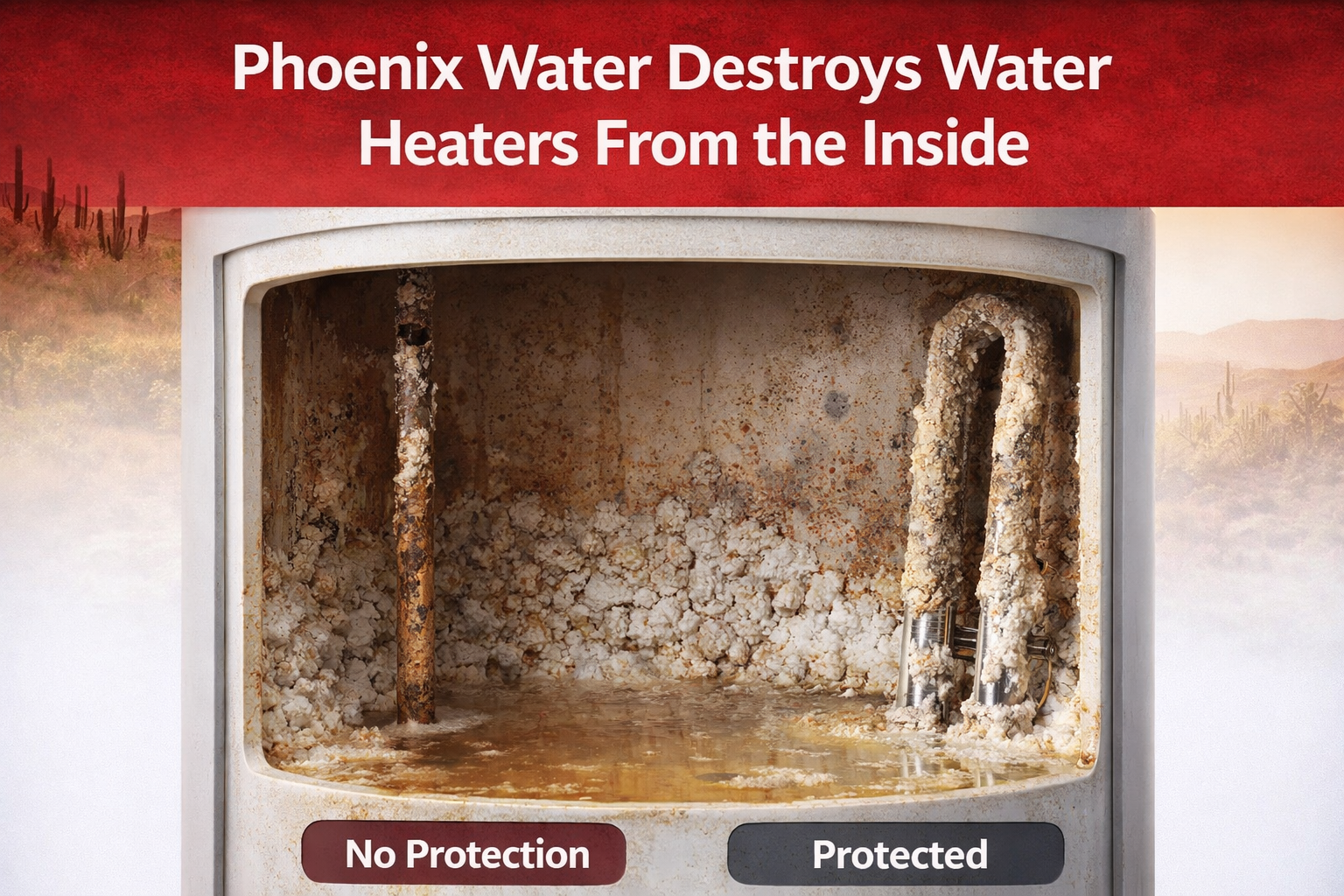
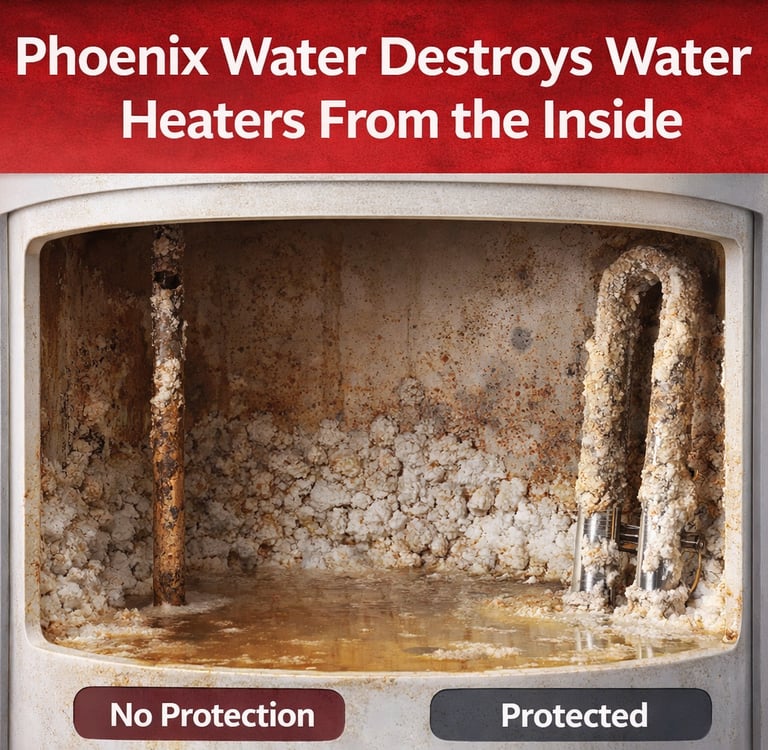
If you live in the Phoenix metro area and your water heater didn’t last as long as expected—you’re not imagining it.
Across Phoenix, Scottsdale, Mesa, Chandler, Gilbert, Peoria, and surrounding areas, water heaters consistently wear out faster than in most parts of the country.
This isn’t a product issue.
It’s the environment your system operates in every day.
Why Water Heaters Wear Out Faster in Phoenix
There are two primary factors working against your system:
1. Hard Water (The #1 Cause in Phoenix)
The Phoenix area has extremely hard water, meaning it contains high concentrations of minerals like calcium and magnesium.
Over time, these minerals:
Build up inside your tank
Coat heating elements
Accelerate internal corrosion
What we see locally:
Water heaters in Phoenix often show signs of wear years earlier than systems in softer water regions.
2. Heat + High Usage Demands
Phoenix homes create additional stress on water heaters:
Higher incoming water temperatures
Increased daily usage (especially in larger households)
More strain on internal components
Combined with hard water, this creates a perfect storm for early system failure.
The Hidden Reason Most Water Heaters Fail
Inside every tank water heater is a component called an anode rod.
Its job is simple:
Protect the tank by attracting corrosion.
But here’s the problem in Phoenix:
Anode rods wear out much faster
Often depleted in 2–3 years
Rarely inspected or replaced
Once the anode rod is gone, the tank itself becomes the next target.
At that point, failure isn’t random—it’s inevitable.
Warning Signs Your Water Heater Is Breaking Down
Most systems don’t fail overnight. They give warning signs first:
Reduced hot water capacity
Popping or rumbling noises
Discolored or rusty water
Leaks forming at the base
System is 5–7+ years old with no maintenance
In Phoenix, these signs often show up earlier than expected.
How to Extend the Life of Your Water Heater in Phoenix
The good news—you can control this.
1. Annual Tank Flushing
Removes mineral buildup that damages internal components.
Recommended: once per year minimum
More often in Phoenix due to hard water
2. Monitor the Anode Rod
This is the most overlooked factor.
Replacing it when needed can:
Slow corrosion
Extend system lifespan
Prevent premature failure
3. Upgrade to a Powered Anode Rod
In Phoenix, this is one of the most effective upgrades available.
A powered anode rod:
Provides continuous protection
Does not degrade over time
Performs consistently in hard water
What we see locally:
Homeowners who upgrade typically experience:
Longer system life
Fewer issues
Less maintenance
4. Improve Water Quality
Depending on your home:
Water softeners
Filtration systems
can reduce stress on your system and improve performance.
What Happens If You Do Nothing
Most failures aren’t sudden—they’re the result of long-term internal damage.
In Phoenix, neglect can lead to:
Premature tank failure
Unexpected leaks or water damage
Early full system replacement
A system rated for 10–12 years may last 6–8 years—or less.
Frequently Asked Questions
How long should a water heater last in Phoenix?
Most systems are rated for 8–12 years, but in Phoenix, we commonly see shorter lifespans due to hard water and mineral buildup.
Is Phoenix water really that hard?
Yes. The mineral content significantly accelerates scaling and corrosion inside your tank.
Can maintenance actually extend lifespan?
Absolutely. Flushing and anode rod maintenance can add several years to your system.
Are powered anode rods worth it in Phoenix?
In most cases, yes. They provide consistent long-term protection and reduce maintenance requirements.
Final Thought
Water heaters in Phoenix operate under some of the toughest conditions in the country.
Understanding why—and taking action early—can mean the difference between replacing your system prematurely… or getting the full lifespan you paid for.
Need Help With Your Water Heater in Phoenix?
Water Heater Pete can inspect your system, identify potential issues early, and recommend the right solution based on Phoenix water conditions.
Call us today to book an installation:
Book an Installation Online:
Leave us a review:
© 2026. All rights reserved.
Doing Business As Fix It Floyd, LLC




4% Fee for credit card