Flat Fee Upfront Pricing Specialist (480) 447-7550

What Does an Anode Rod Do in a Water Heater?
What Does an Anode Rod Do in a Water Heater? (And Why It Matters in Arizona)
Water Heater Pete
3/30/20263 min read
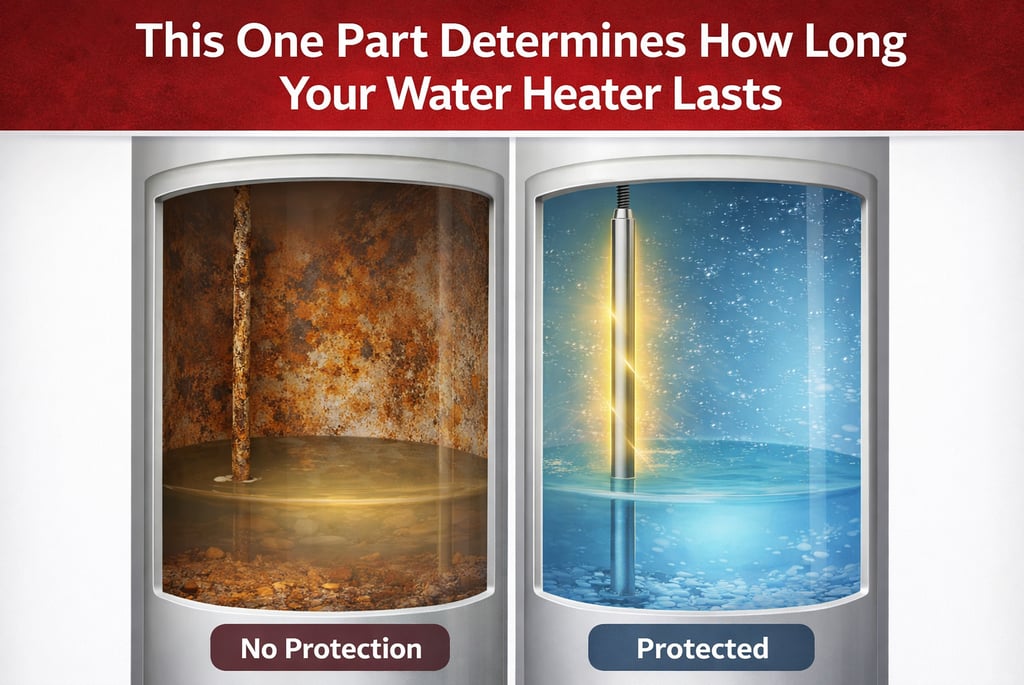
Most homeowners don’t realize their water heater has a built-in component designed to fail.
It’s called the anode rod—and it plays a critical role in how long your water heater lasts.
If you’ve never heard of it, you’re not alone. But understanding what it does could mean the difference between getting a few years out of your system… or getting a full decade or more.
What Is an Anode Rod?
An anode rod is a long metal rod installed inside your water heater tank.
Its job is simple:
protect the tank from rust and corrosion.
Water—especially in areas like Arizona—is full of minerals and impurities that naturally break down metal over time. Without protection, the inside of your tank would begin to rust fairly quickly.
The anode rod exists to prevent that.
How an Anode Rod Works (Simple Explanation)
The anode rod uses a process called sacrificial corrosion.
Instead of your water heater tank corroding…
the rod corrodes first.
● The rod attracts corrosive elements in the water
● It absorbs the damage
● It slowly dissolves over time
This protects the steel lining of your tank and significantly extends its lifespan.
Think of it as a bodyguard for your water heater—taking the hits so your system doesn’t have to.
Why Anode Rods Matter More in Arizona
Here’s where most homeowners underestimate the impact.
Water in the Phoenix area is considered very hard, meaning it contains high levels of minerals like calcium and magnesium. That creates a much more aggressive environment inside your tank.
What we see locally:
In Arizona, it’s not uncommon for anode rods to be significantly depleted in as little as 2–3 years—sometimes even sooner depending on usage and water conditions.
What that means for you:
● Faster corrosion inside the tank
● Increased wear on internal components
● A higher risk of premature water heater failure
Once the anode rod is gone, your tank becomes the next target.
How Long Does an Anode Rod Last?
On average:
● Standard lifespan: 2–5 years
● In Arizona: Often 2–3 years in many homes
The problem is, most homeowners never check or replace it.
By the time symptoms show up—like rusty water or leaks—the internal damage has already started.
Signs Your Anode Rod May Be Failing
There are a few early warning signs to watch for:
● A rotten egg smell coming from your hot water
● Discolored or rusty water
● Popping or rumbling sounds from the tank
● Your water heater is over 3–5 years old with no maintenance
These don’t always guarantee the rod is gone—but they’re strong indicators it may be time to inspect it.
Can You Replace an Anode Rod?
Yes—and in many cases, replacing it can extend the life of your water heater.
However:
● It often requires specialized tools
● Older rods can be extremely difficult to remove
● Clearance issues (especially in garages or tight installs) can make it challenging
In some cases, homeowners opt for longer-term solutions instead of repeated replacements.
The Smarter Way to Think About It
Most people never think about their water heater until it fails.
But the reality is:
your system doesn’t fail randomly—it wears out over time.
And the anode rod is one of the biggest factors in that process.
If it’s maintained—or upgraded—properly, you can:
● Extend the life of your system
● Reduce the risk of unexpected leaks
● Avoid premature replacement costs
Frequently Asked Questions About Anode Rods
How much does it cost to replace an anode rod?
Typically, professional replacement can range from $150–$400, depending on the condition of the rod and accessibility. Severely corroded rods can increase labor time.
Can I replace an anode rod myself?
It’s possible, but not always easy. Many rods are tightly secured and require significant torque to remove. Without the proper tools, it can be difficult or even risky.
What happens if I never replace the anode rod?
Once the rod is fully depleted, the inside of your tank begins to corrode. Over time, this leads to:
● Rust buildup
● Leaks
● Full system failure
At that point, replacement of the entire water heater is usually required.
Why does my hot water smell like rotten eggs?
This is often caused by a reaction between bacteria and the anode rod, producing hydrogen sulfide gas. It’s a common issue in certain water conditions and can often be resolved with the right solution.
Are there better alternatives to traditional anode rods?
Yes. Newer solutions, like powered anode rods, are designed to prevent corrosion without breaking down over time. These are especially effective in areas with hard water like Arizona.
Final Thought
If you live in Arizona, your water heater operates in one of the toughest water environments in the country.
Understanding how something as simple as an anode rod works—and how quickly it can wear out—puts you in a much better position to protect your system and avoid unexpected failure.
Need help checking your water heater or replacing an anode rod?
Water Heater Pete can inspect your system, explain your options clearly, and help you extend the life of your water heater with the right solution for Arizona conditions. Call Today : (480) 447-7550
Call us today to book an installation:
Book an Installation Online:
Leave us a review:
© 2026. All rights reserved.
Doing Business As Fix It Floyd, LLC




4% Fee for credit card