Flat Fee Upfront Pricing Specialist (480) 447-7550

Powered Anode Rod vs Traditional Anode Rod
Every water heater has one job internally: prevent the tank from rusting. Water naturally corrodes metal over time. Without protection, your tank would begin to deteriorate from the inside out.
Water Heater Pete
3/27/20263 min read
If you’ve been told your water heater needs a new anode rod—or you’re trying to extend the life of your system—you may come across two options:
● A traditional anode rod
● A powered (electric) anode rod
At first glance, they serve the same purpose.
But how they work—and how well they perform, especially in Arizona—are very different.
What Both Types of Anode Rods Are Designed to Do
Every water heater has one job internally:
prevent the tank from rusting.
Water naturally corrodes metal over time. Without protection, your tank would begin to deteriorate from the inside out.
Both traditional and powered anode rods exist to stop that process.
The difference is how they do it—and how long they last.
Traditional Anode Rod (Sacrificial Protection)
A traditional anode rod is made from metals like magnesium, aluminum, or zinc.
It works by sacrificing itself.
● It attracts corrosive elements in the water
● It corrodes instead of the tank
● It slowly dissolves over time
The upside:
● Low upfront cost
● Simple design
● Standard in most water heaters
The downside:
● Wears out and must be replaced
● Performance depends on water quality
● Can cause odor issues in certain conditions
What we see in Arizona:
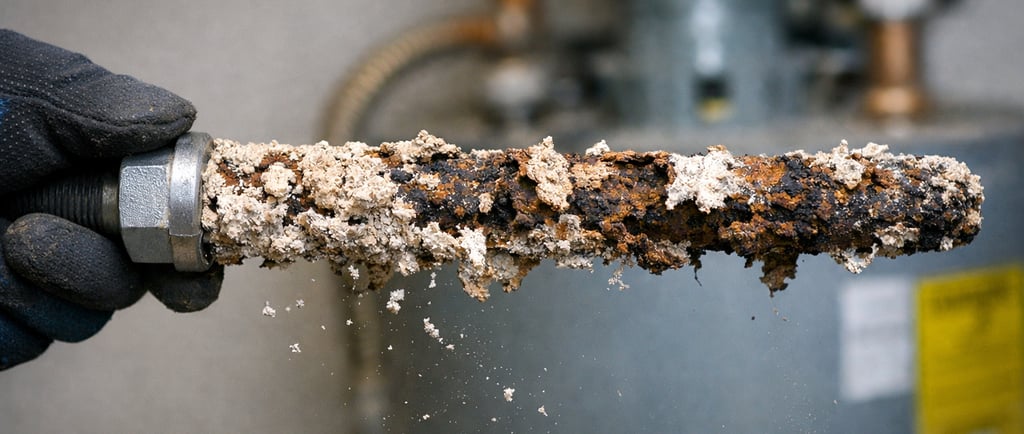
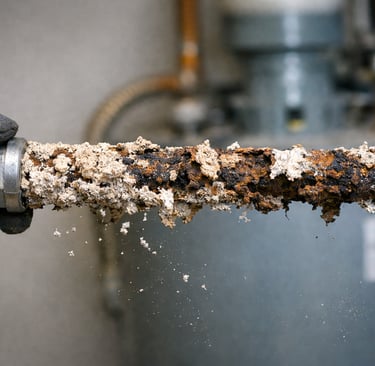
In Phoenix and surrounding areas, these rods often deplete in 2–3 years, sometimes faster due to hard water conditions. Once the rod is gone, the tank is next.
Powered Anode Rod (Active Protection)
A powered anode rod takes a completely different approach.
Instead of sacrificing itself, it uses a low-voltage electrical current to prevent corrosion inside the tank.
● Made from titanium (does not degrade)
● Plugged into a standard outlet
● Provides consistent internal protection
The upside:
● Does not wear out
● Consistent performance regardless of water quality
● Eliminates most odor issues
● Long lifespan (often lasts the life of the tank)
The downside:
● Higher upfront cost
● Requires access to power
● Slightly more advanced installation - pro install recommended
Key Differences That Actually Matter
When comparing these two, most homeowners focus on price.
But the real decision comes down to longevity, maintenance, and performance in your specific water conditions.
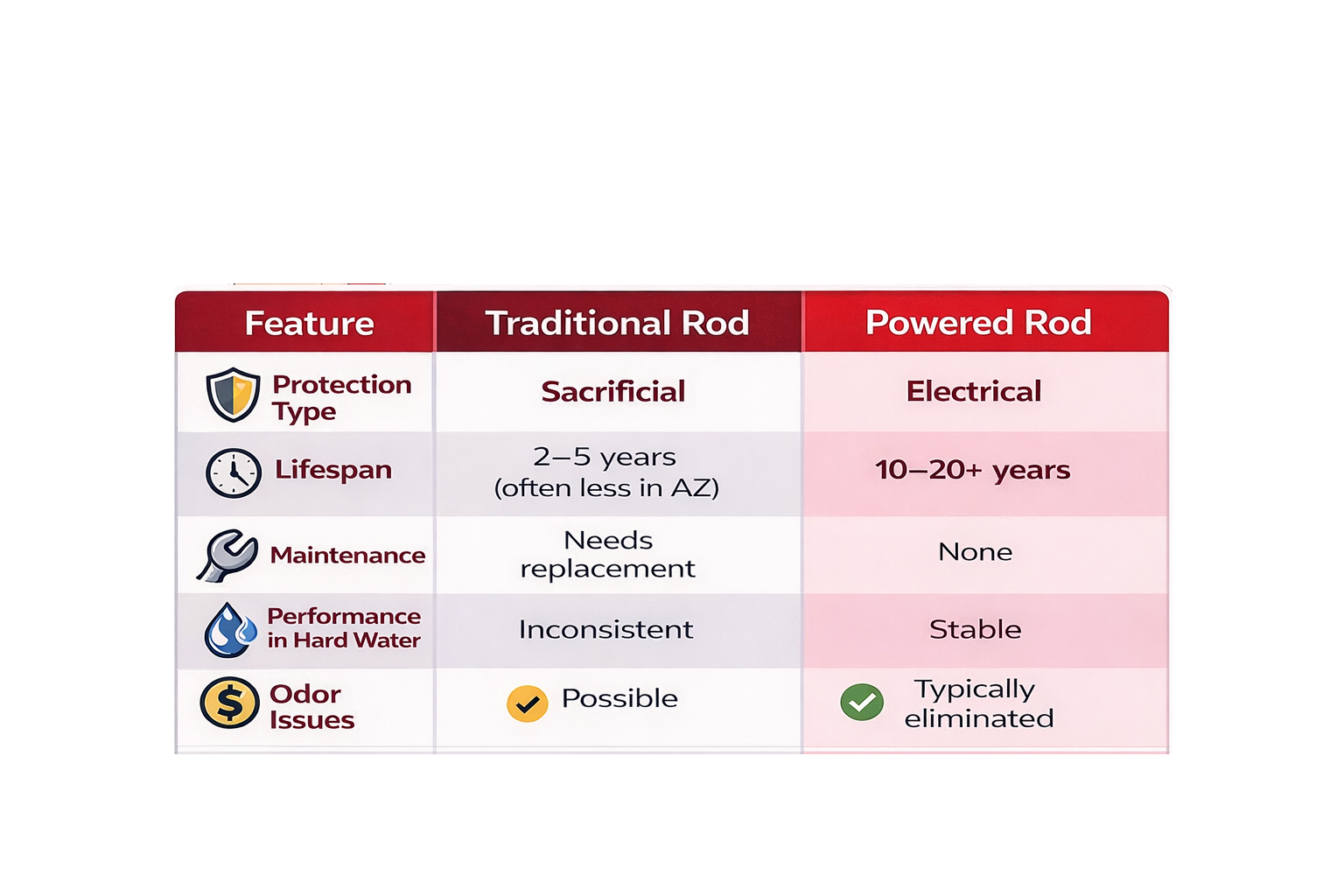
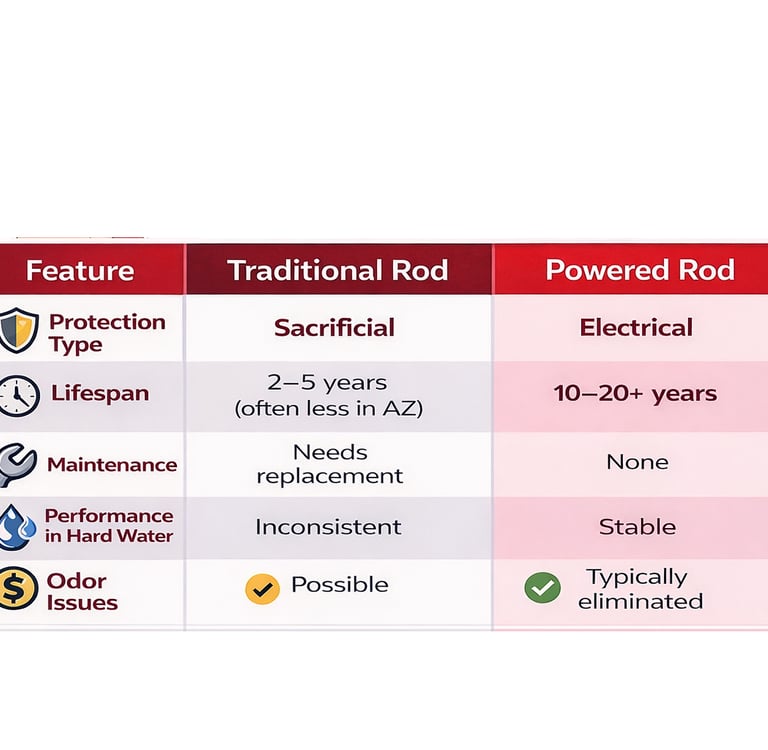
Side-by-side comparison:
Why This Matters More in Arizona
Arizona water is known for being extremely hard and mineral-heavy.
That creates a more aggressive environment inside your water heater.
What this means in real-world terms:
● Traditional rods wear out faster
● Corrosion happens sooner
● Water heaters often fail earlier than expected
We regularly see systems in the Phoenix area with completely depleted anode rods in just a few years—leaving the tank exposed long before homeowners realize there’s an issue.
A powered anode rod removes that variability by actively controlling the environment inside the tank.
Which One Should You Choose?
The right answer depends on how you think about your water heater.
Traditional rod may make sense if:
● You’re looking for the lowest upfront cost
● You plan to replace the water heater in the near future
● You’re okay with periodic maintenance
Powered rod is the better choice if:
● You want to maximize the lifespan of your system
● You want a “set it and forget it” solution
● You’ve experienced odor issues
● You live in an area with hard water (like Arizona)
Cost vs Value (What Most People Overlook)
A traditional rod is cheaper upfront—but it:
● Needs to be replaced
● May not last long in hard water
● Leaves room for failure if neglected
A powered rod costs more initially—but:
● Requires no replacement
● Protects consistently
● Can extend the life of your water heater significantly
When you look at the total cost over time, the difference often becomes much smaller than it appears upfront.
Frequently Asked Questions
Are powered anode rods worth it?
In hard water environments like Arizona, they often provide significantly better long-term value due to their durability and consistent performance.
Do powered anode rods really eliminate smell?
In most cases, yes. They address the root cause of the sulfur smell that can develop with traditional rods.
Can I upgrade to a powered anode rod on my existing water heater?
Yes. Most systems can be retrofitted, depending on access and condition of the tank.
Do powered anode rods require maintenance?
No. Once installed, they typically operate without needing replacement or ongoing service.
Final Thought
Both types of anode rods are designed to protect your water heater.
But in a place like Arizona—where water conditions are tougher than average—the difference between them becomes much more noticeable.
If you’re looking for a basic, short-term solution, a traditional rod will do the job.
If you’re looking for long-term protection, fewer problems, and a more reliable system, a powered anode rod is the stronger option.
Not sure which option is right for your water heater?
Water Heater Pete can take a look at your system, explain your options clearly, and help you choose the solution that makes the most sense for your home and your budget.
Call us today to book an installation:
Book an Installation Online:
Leave us a review:
© 2026. All rights reserved.
Doing Business As Fix It Floyd, LLC




4% Fee for credit card